The Spring Market Has Arrived — and Buyers Are Back
If you've been watching the Toronto real estate market from the sidelines, the past few months have been worth paying attention to. After a cautious start to the year, sales activity across the GTA has picked up meaningfully — and the numbers from TRREB reflect that shift clearly.
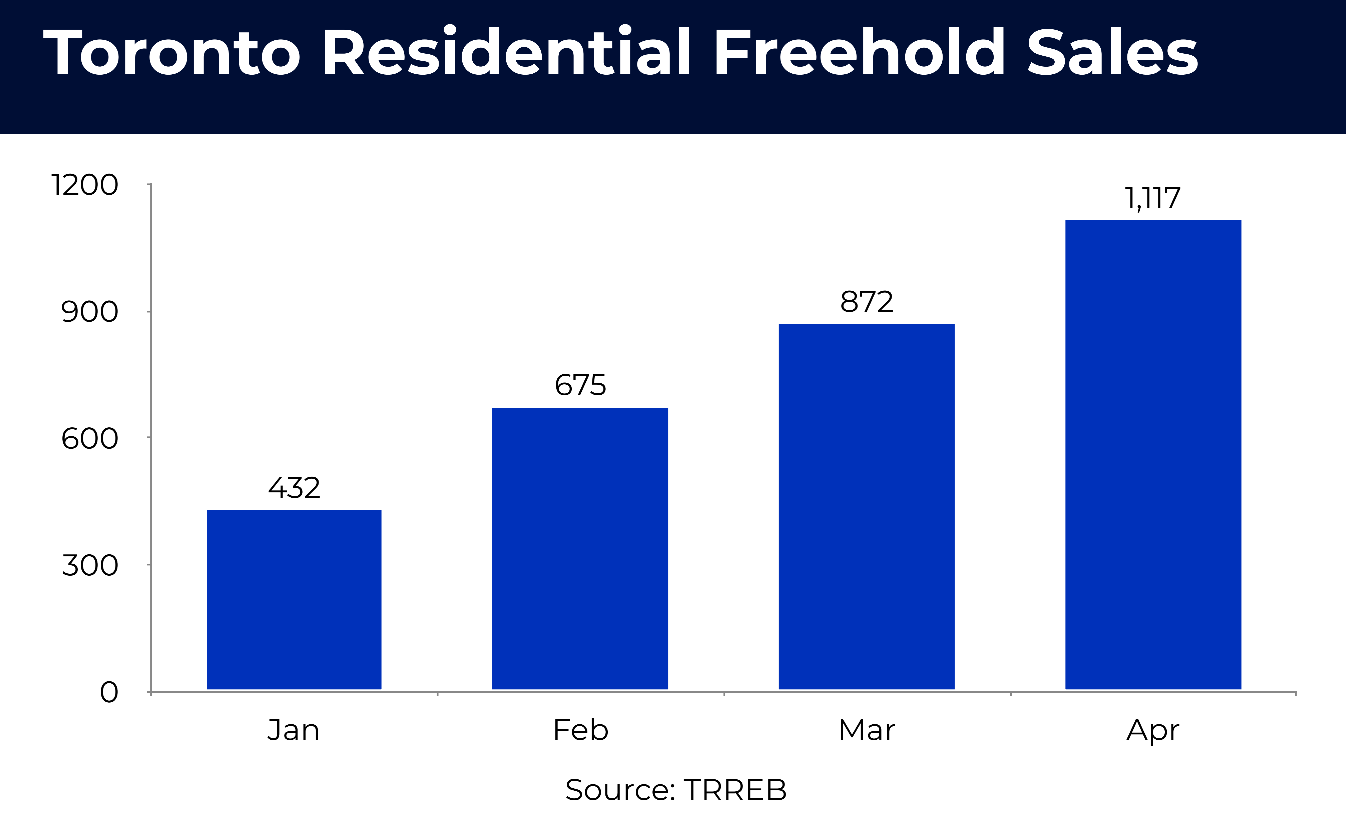
Toronto residential freehold sales went from 432 in January to 1,117 in April — more than doubling in just four months. York Region followed an almost identical pattern, climbing from 418 sales in January to 757 in April. That kind of consistent month-over-month growth isn't noise. It's buyers making decisions.
At the same time, the GTA benchmark home price sits at $944,100 — up slightly month-over-month, but still roughly 6.6% below where it was a year ago. Homes are spending an average of 43 days on market, up from 33 days last April. What that combination tells you is this: activity is building, but buyers still have time and leverage. That rarely lasts long once momentum takes hold.
Why York Region Is Drawing So Much Attention Right Now
One of the more interesting stories in the 2026 spring market is happening north of the city. York Region — covering communities like Richmond Hill, Markham, Vaughan, Aurora, and Newmarket — is seeing sales activity that, relative to available inventory, looks tighter than central Toronto.
The reason isn't hard to understand. Buyers who have been priced out of Toronto freeholds, or who simply want more space, newer construction, and a different lifestyle, are finding York Region offers genuinely compelling value. You get larger homes, more land, newer finishes, and family-oriented neighbourhoods — often at prices that still undercut comparable properties in the 416.
For anyone currently in a Toronto condo and thinking about a move up into a freehold, York Region deserves a serious look. The gap between what you're selling and what you're buying may be smaller — and more manageable — than you'd expect.
The Condo Market: A Real Opportunity for the Right Buyer
Toronto's condo market has had a difficult couple of years, and that correction has created something that doesn't come around often: genuine buyer leverage in a city where that's historically rare.
Condo sales have recovered strongly in volume terms — climbing from 681 sales in January to 1,157 in April — but prices remain soft. Average condo prices in Toronto are still approximately 6% below last year's levels, and in buildings with high investor-owned inventory, there's real room to negotiate.
For first-time buyers, this is one of the more workable entry points the Toronto condo market has offered in recent memory. You have time to look properly, room to negotiate, and the ability to make decisions based on what actually works for your life — not just fear of missing out.
For move-up buyers, the math is also worth revisiting. The condo you're selling has come down in price — but the freehold you're moving into has typically come down more in absolute dollar terms. The net cost of the upgrade is often lower than people assume.
Pre-Construction Status:
The pre-construction market in the GTA has been through a significant reset. New condo sales in the Greater Toronto and Hamilton Area fell to their lowest level since 1991 last year — and builders, facing unsold inventory and rising carrying costs, have had to respond.
What that means in practice is a set of buyer-friendly conditions that simply didn't exist when the market was hot. Builders are offering lower per-square-foot prices, reduced deposit structures, free parking, premium upgrade packages, and in some cases assignment flexibility. These aren't small perks — they're meaningful financial concessions from developers who need sales.
On top of that, Ontario's HST rebate on new homes priced under $1 million is in effect right now through March 2027. On a qualifying purchase, this can represent tens of thousands of dollars in savings at closing — a genuine reduction in your cost of entry that buyers in 2021 or 2022 never had access to.
The policy environment is shifting in other ways too. Ontario's development charges agreement with the federal government, and Vaughan's decision to cut residential development charges to zero in late April, are beginning to reduce the cost of building new homes. When those savings are passed through, buyers benefit.
So Where Does That Leave You?
Spring 2026 is not 2021. There are no lineup offers, no frenzied bidding wars on every property, no sense that you have to decide in 24 hours or lose out forever. What there is, instead, is a market that has meaningfully corrected from its peak, where sellers are realistic, builders are incentivizing, and the monthly sales trend is pointing clearly upward.
That combination — lower prices, less competition, improving momentum — is historically one of the better times to buy. The question is always whether you recognize it while you're in it, or only looking back.
Whether you're a first-time buyer finally ready to step in, a family looking to upsize in the Greater Toronto Area, a condo owner thinking about a move up, or an investor evaluating where real value sits in this market — the conditions right now are worth understanding properly.
